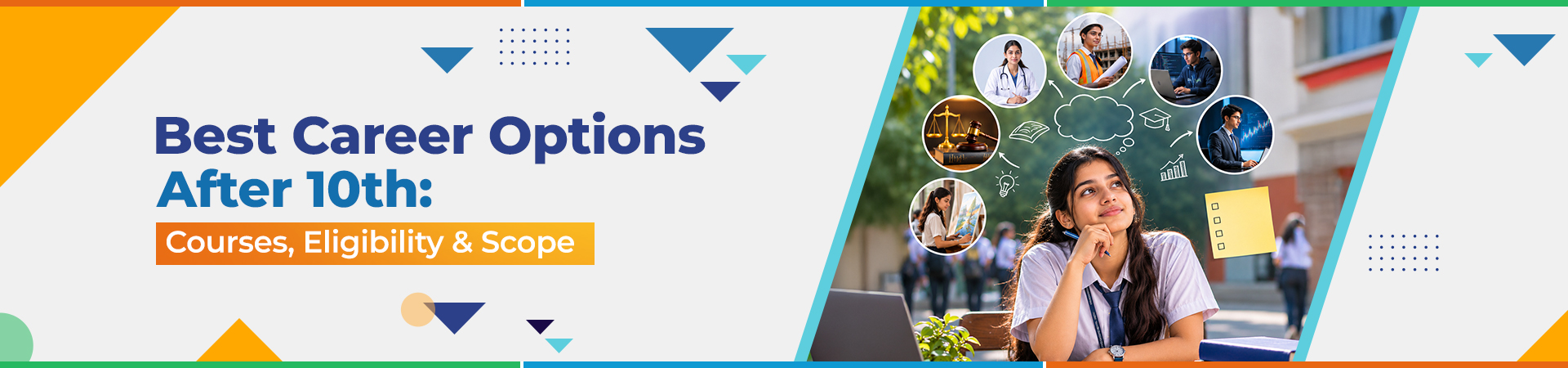
Making the right career decision after Class 10 is essential for your future. But which stream should you choose to match your interests? Should you consider vocational training or pursue a diploma course instead?
The good news is that Science, Commerce, and Arts offer diverse opportunities. Students interested in practical learning can also explore vocational training programmes. ITI (Industrial Training Institutes) and polytechnic courses provide additional pathways towards technical careers.
These options extend beyond conventional professions like medicine and engineering. Fields like technology, business, finance, design, and hospitality offer rewarding opportunities.
This guide explores the best career options after 10th across different fields. It covers popular streams, diploma courses, ITI programmes, and vocational training.
You will also understand eligibility criteria, admission procedures, and future career opportunities. Finally, discover how to choose a suitable path confidently. Consider your interests, strengths, and long-term professional goals.
What Are the Best Career Options After 10th?
After Class 10, students have several paths to consider. Some continue with Class 11 and 12, while others prefer diploma or polytechnic courses.
ITI and vocational training are also worth considering for students who prefer hands-on learning. Short-term skill development courses offer another way to build job-ready skills.
Each option offers different opportunities, so the right choice depends on your interests and where you see yourself in the coming years.
Let’s look at what each pathway offers.
Continue with Class 11 and 12
Students can choose Science, Commerce, or Arts based on their interests and academic strengths. Completing Class 12 also keeps several undergraduate and professional course options open.
Pursue a Diploma or Polytechnic Course
Diploma courses offer specialised knowledge in fields like engineering, technology, and design. Polytechnic programmes combine classroom learning with practical training and technical skills.
Choose ITI or Vocational Training
ITI programmes prepare students for specific trades through practical, hands-on training. Vocational courses also help develop industry-relevant skills for different types of employment.
Enroll in a Short-Term Skill Development Course
Short-term courses help students develop specific skills without committing to lengthy programmes. Options in computers, digital tools, design, and other fields can support further learning or entry-level work.
Career Options After 10th by Stream
Choosing the best stream after 10th depends on your interests, favourite subjects, and future career plans. Science, Commerce, and Arts each offer different courses and professional opportunities.
Science Stream: Courses and Career Scope
Science suits students interested in technology, healthcare, research, and understanding how things work.
Popular courses and career scope after choosing Science include:
- Physics, Chemistry, and Mathematics (PCM): Prepares students for engineering, architecture, computer science, and other technical fields.
- Physics, Chemistry, and Biology (PCB): Opens pathways towards healthcare, biotechnology, pharmacy, and life sciences.
- Computer Science: Builds programming and computational skills, creating opportunities in software development, IT, and data-related fields.
Commerce Stream: Courses and Career Scope
Commerce suits students interested in business, finance, accounting, and economics.
The following are the commerce courses and their career scope:
- Accountancy, Business Studies, and Economics: Build a foundation for accounting, business management, finance, and entrepreneurship.
- Mathematics and Economics: Supports further studies in economics, banking, financial analysis, and statistics.
- Business Studies and Entrepreneurship: Develops business knowledge useful for management, marketing, and starting a business.
Arts and Humanities: Courses and Career Scope
Arts and Humanities suit students interested in society, communication, creativity, history, and human behaviour.
Students can opt for the following courses and career scope in Arts:
- History, Political Science, and Geography: Provide a foundation for civil services, public administration, teaching, and research.
- Psychology and Sociology: Opens opportunities in counselling-related fields, social work, human resources, and research with further qualifications.
- English Literature and Fine Arts: Supports careers in writing, journalism, content creation, design, media, and creative industries.
Best Diploma Courses After 10th
Diploma courses after 10th allow students to specialise in a particular field early. These programmes combine classroom learning with practical training and industry-related skills.
Diploma in Mechanical Engineering
This diploma covers machine design, manufacturing processes, materials, and industrial equipment. Students learn how mechanical systems work and gain skills relevant to manufacturing and production industries.
Diploma in Civil Engineering
Students learn about building construction, structural design, surveying, and construction materials. The course prepares them for technical roles in construction companies, infrastructure projects, and engineering firms.
Diploma in Computer Science or Information Technology
This course introduces students to programming, computer systems, networking, and software applications. It builds a foundation for careers in software development, IT support, networking, and technical services.
Diploma in Electrical Engineering
The programme covers electrical circuits, power systems, wiring, and electrical machines. Students develop technical skills for opportunities in electrical maintenance, power generation, manufacturing, and related industries.
Diploma in Hotel Management or Fashion Design
These diplomas suit students interested in hospitality, fashion, and creative industries. Hotel management covers food service, accommodation, and hospitality operations, while fashion design focuses on garment construction, textiles, and design techniques.
Popular ITI and Vocational Courses After 10th
ITI courses after 10th help students learn specific trades through practical training. Similarly, vocational courses after 10th prepare students for skill-based work across different industries.
Electrician and Fitter
Electrician training covers wiring, electrical equipment, circuit installation, and maintenance. Fitter training focuses on assembling, fitting, and repairing machinery and industrial components.
Computer Operator and Programming Assistant (COPA)
COPA introduces students to computer operations, office applications, internet usage, and basic programming. It builds skills relevant to data entry, office administration, and entry-level IT support roles.
Mechanic and Automobile Trades
These courses teach students to inspect, service, and repair vehicles and their components.
Students gain practical knowledge of engines, vehicle systems, and maintenance procedures, preparing them for automobile workshops and service centres. Other technical courses after 10th may also suit students interested in machinery and equipment.
Cosmetology, Fashion, and Other Skill-Based Courses
Students interested in creative and personal care fields can explore cosmetology, beauty therapy, tailoring, and fashion-related training.
Those seeking broader technical education can also consider polytechnic courses after 10th, depending on their interests and eligibility.
Eligibility Criteria for Courses After 10th
Eligibility depends on the course, subjects studied, and the institution’s admission rules. Students should check these requirements before applying to avoid missing suitable opportunities.
Minimum Educational Qualification
Most academic and professional programmes require students to pass Class 10 from a recognised board. However, minimum qualifications differ across courses.
- Class 11 and 12: Students must pass Class 10 to enrol in Science, Commerce, or Arts.
- Polytechnic Diplomas: Most engineering diploma programmes accept students who have passed Class 10 with Mathematics and Science.
- ITI Courses: Depending on the trade, students may apply after Class 8 or Class 10.
- Certificate Courses: Most short-term programmes in digital marketing, graphic design, photography, and computer applications accept Class 10 pass students.
Minimum Marks and Subject Requirements
Some courses require a specific percentage, while others consider only passing. Subject combinations also play an important role in determining eligibility.
- Science Stream: Schools may require around 35%-50% aggregate marks in Class 10. Mathematics and Science are generally important for PCM and PCB combinations.
- Commerce Stream: Students generally need 35%-45% aggregate marks, depending on school admission policies. Mathematics may be preferred but is not compulsory everywhere.
- Arts and Humanities: Most schools require at least 35-45% without specific subject requirements.
- Polytechnic Diplomas: Several state admission systems require approximately 35% aggregate marks, along with Mathematics and Science.
Entrance Exams and Admission Procedures
Admission procedures vary between academic institutions, polytechnic colleges, and ITIs. Some offer merit-based admission, while others conduct entrance examinations or counselling.
- Class 11 and 12: Schools generally admit students based on Class 10 results and available stream-specific seats.
- Polytechnic Diplomas: Admission may involve state-level entrance examinations, merit lists, or centralised counselling.
- ITI Programmes: Many institutes prepare merit lists based on Class 10 marks, depending on the admission authority.
- Certificate Courses: Private training institutes generally follow their own application and admission procedures.
Documents Required for Admission
Keep the necessary documents ready before applying to a school, polytechnic college, or ITI. Most institutions ask for the following during registration and verification:
- Class 10 marksheet and passing certificate
- Transfer certificate from the previous school
- Date of birth proof
- Aadhaar card or another valid identity document
- Recent passport-size photographs
- Caste or category certificate, if applicable
- Domicile certificate, if required
- Migration certificate, where applicable
Career Scope After 10th: Jobs and Future Opportunities
Career opportunities after Class 10 extend across technical, non-technical, vocational, and skill-based fields. The right course can help students secure jobs or pursue further education.
Career Opportunities After Class 12
Students can choose from several career options after Class 12, depending on their stream, interests, and skills.
- Engineering: Pursue B.Tech or related courses to build careers in software development, civil engineering, mechanical engineering, or other technical fields.
- Medicine and Healthcare: Choose MBBS, BDS, nursing, pharmacy, or allied health courses to work in healthcare and medical services.
- Business and Management: Study BBA, B.Com, or related programmes to explore careers in finance, marketing, human resources, or business management.
- Law: Enroll in an integrated BA LLB or BBA LLB programme to pursue a career as a lawyer or legal professional.
- Design and Creative Arts: Explore courses in fashion design, graphic design, animation, or fine arts to build a career in creative industries.
- Media and Communication: Pursue journalism, mass communication, or public relations courses to work in media, content creation, advertising, or communications.
Job Opportunities After Diploma and ITI Courses
Diploma and ITI programmes are among the most practical job-oriented courses after 10th, offering pathways into skilled professions.
- Electrician: Install, maintain, and repair electrical wiring, equipment, and systems in homes, industries, and commercial buildings.
- Mechanical Technician: Work with machinery, engines, and industrial equipment in manufacturing and maintenance units.
- Automobile Technician: Inspect, service, and repair vehicles, including their engines, brakes, and electrical systems.
- Welder: Join metal components using specialised welding techniques in construction, fabrication, and manufacturing.
- Computer Hardware Technician: Assemble, troubleshoot, and maintain computers, networking equipment, and related hardware.
- Refrigeration and AC Technician: Install, service, and repair air conditioning systems, refrigerators, and other cooling equipment.
Higher Education and Professional Qualifications
After 10th, students can pursue further studies or professional certifications through higher education. Here are the professional qualifications they can achieve:
- Polytechnic Diploma: A three-year programme in engineering fields such as civil, mechanical, electrical, or computer engineering, offering practical and technical knowledge.
- Higher Secondary Education (11th and 12th): Continue with Science, Commerce, or Arts to build subject knowledge and prepare for undergraduate studies.
- ITI Certification: Complete trade-based training in fields such as electrician, fitter, mechanic, or computer operator to develop practical skills.
- Paramedical Courses: Pursue healthcare training in medical laboratory technology, radiology, or operation theatre technology to explore allied healthcare careers.
- Computer Applications and IT Certifications: Learn programming, web development, computer applications, or networking through recognised certificate programmes.
- Professional Design Courses: Gain specialised training in fashion design, graphic design, interior design, or animation to develop industry-relevant creative skills.
Skills That Can Improve Long-Term Career Growth
Building the right skills alongside formal education can help students adapt to changing industries and grow professionally.
- Communication Skills: Express ideas clearly, interact confidently with colleagues, and build better professional relationships.
- Technical Skills: Develop practical knowledge of tools, software, machinery, or technologies relevant to the chosen career.
- Problem-Solving Skills: Learn to assess challenges, think logically, and find workable solutions in different situations.
- Digital Literacy: Understand common digital tools, online platforms, and workplace technologies used across modern industries.
- Time Management: Organise tasks, meet deadlines, and balance professional responsibilities more effectively.
- Teamwork and Collaboration: Work well with others, share responsibilities, and contribute to common goals in a professional environment.
Diploma vs Class 11 and 12: Which Is Better After 10th?
The right choice depends on career interests, learning preferences, and future goals. Class 11 and 12 provide an academic foundation, while diploma courses focus more on practical and technical training.
| Comparison Factor | Diploma Courses | Class 11 and 12 |
| Main Focus | Practical training and specialised technical knowledge. | Academic learning across Science, Commerce, or Arts. |
| Duration | Usually 1-3 years, depending on the course. | 2 years after Class 10. |
| Learning Approach | Combines classroom teaching with practical sessions and hands-on training. | Focuses mainly on theory, subject understanding, and exams. |
| Eligibility | Most programmes require completion of Class 10, though requirements vary. | Requires successful completion of Class 10 from a recognised board. |
| Career Opportunities | Opens pathways to technical jobs and further specialised education. | Prepares students for undergraduate degrees and professional courses. |
| Further Education | Eligible students can pursue advanced diplomas or relevant degree programmes, subject to admission requirements. | Students can apply for undergraduate programmes after Class 12. |
| Best Suited For | Students interested in technical skills and career-focused training. | Students who want broader academic options and time to explore career interests. |
How to Choose the Right Career After 10th?
Choosing the right career after 10th requires understanding your interests, abilities, and future aspirations. Compare available courses carefully before deciding which path suits your goals.
Identify Your Interests and Strengths
Think about the subjects you enjoy and the activities you perform well. Consider whether you prefer academic learning, practical work, creative tasks, or technical activities.
Research Course Eligibility and Future Options
Check the minimum marks, subject requirements, entrance tests, and age criteria for each course. Also, look into further study options and the career opportunities available after completing the programme.
Compare Fees, Duration, and Institution Quality
Compare course fees, programme duration, and additional expenses before shortlisting institutions. Check their accreditation, faculty experience, practical training facilities, and placement support.
Consider Long-Term Career Goals
Think about the kind of work you want to pursue and the qualifications it requires. Before deciding, consider future study opportunities, industry demand, and potential career growth.
Seek Guidance from Parents, Teachers, and Career Counsellors
Discuss your interests and career plans with people who understand your abilities and academic performance. A qualified career counsellor can also help you assess suitable courses and understand their long-term prospects.
Make the Right Career Choice After 10th for a Brighter Future
The best career options after 10th depend on your interests, strengths, and long-term aspirations. Whether you prefer academic studies, technical training, or vocational education, each path offers different growth opportunities.
Take time to compare courses, understand eligibility requirements, and consider the scope of each profession before making a decision. With so many options, choosing the right career path after 10th can feel difficult.
At Career Planner, we help students understand their options and make informed academic decisions. Our biggest education fair connects students and parents with different institutes and industry experts to simplify course selection and identify suitable paths based on their interests and goals.
Visit our upcoming education fair to build a career after 10th.
FAQs
1. What are the best career options after 10th in India?
The best career options after 10th in India include pursuing Science, Commerce, or Arts in Class 11 and 12. Students can also consider polytechnic diplomas, ITI programmes, vocational training, and skill-based courses. The right choice depends on individual interests and career goals.
2. Which courses can I pursue after completing Class 10?
Students can pursue polytechnic diplomas, ITI trades, paramedical programmes, computer courses, and vocational training. They can also continue with higher secondary education. Each option offers different learning opportunities and career pathways.
3. Which stream should I choose after 10th: Science, Commerce, or Arts?
Choose Science if you enjoy mathematics, technology, or healthcare-related subjects. Commerce suits students interested in business, finance, and accounting, while Arts offers opportunities in humanities, social sciences, and creative fields. Consider your strengths and plans before deciding.
4. What are the best diploma courses after 10th?
The best diploma courses after 10th include mechanical engineering, civil engineering, electrical engineering, computer engineering, and automobile engineering. These programmes combine theoretical learning with practical training. Course availability and eligibility vary across institutions.
5. Which ITI courses are available after 10th?
Popular ITI trades include Electrician, Fitter, Welder, Turner, Mechanic Diesel, and Computer Operator and Programming Assistant (COPA). Most focus on practical skills and trade-specific knowledge. Eligibility and course duration depend on the chosen trade.
6. Can I get a job after completing a course after 10th?
Yes, you can get an entry-level job after completing a diploma, ITI, or vocational course after the 10th-class examination. Opportunities depend on the qualification, practical skills, and employer requirements. Some students also pursue apprenticeships to gain workplace experience.
7. What are the eligibility criteria for courses after 10th?
Most courses require students to pass Class 10 from a recognised board. Some programmes specify minimum marks, particular subjects, or entrance examinations. Always check the institution’s admission requirements before applying.
8. Is a diploma course better than studying in Class 11 and 12?
A diploma suits students interested in specialised technical training, while Class 11 and 12 offer broader academic choices. Your preferred learning style and long-term career plans should guide the decision.
9. Which career options after 10th are suitable for students interested in technical fields?
Students interested in technical work can consider polytechnic diplomas in mechanical, civil, electrical, or computer engineering. ITI trades such as electrician, fitter, and mechanic are also worth considering. These programmes develop practical, industry-related skills.
10. How can I choose the right career path after completing Class 10?
Start by identifying your interests, strengths, and preferred subjects: research available courses, eligibility requirements, fees, and future opportunities. Discuss your choices with teachers, parents, or career counsellors before making a final decision.