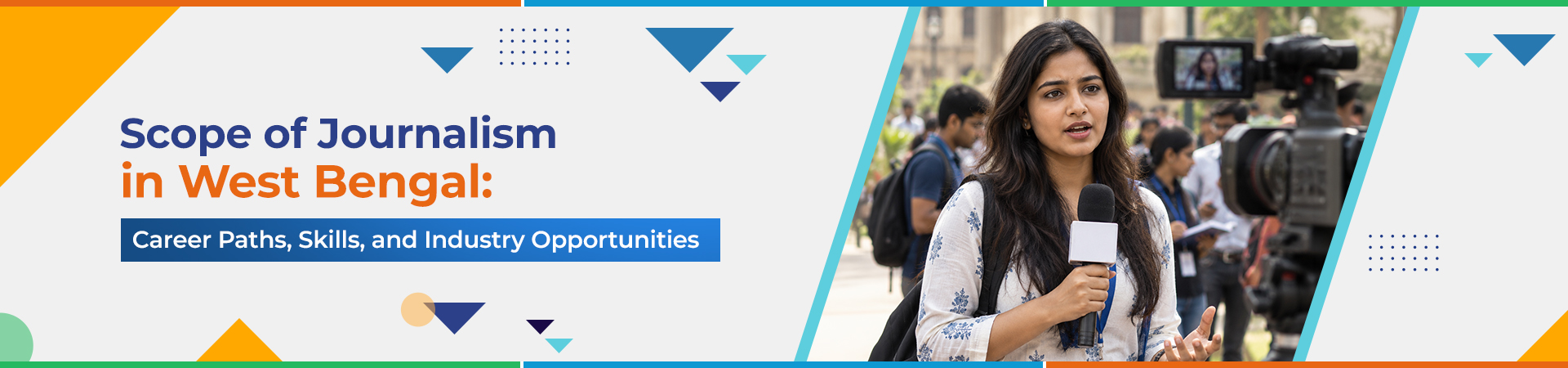
Journalism has been an ever-evolving field. Technology has changed how people consume news, from printed newspapers and television broadcasts to instant updates on smartphones.
This has expanded the scope of journalism, creating opportunities beyond traditional reporting.
Digital media has made news more accessible and opened new paths in online reporting, multimedia storytelling, and digital publishing. For students who enjoy writing, current affairs, and asking questions, journalism offers several career options.
A bachelor’s degree can be a useful starting point, although specific job requirements vary.
This blog explores the scope of journalism in West Bengal, including career paths, essential skills, and courses after Class 12, and industry opportunities.
What Is the Scope of Journalism in West Bengal?
The scope of journalism in West Bengal extends across print, television, digital media, and related communication fields. Students can explore different roles based on their interests, language skills, and practical experience.
Key areas include:
- Print journalism: Reporting, editing, and writing for newspapers and magazines.
- Television and broadcast journalism: Presenting news, reporting events, and producing news programmes.
- Digital journalism: Creating news reports and multimedia content for online platforms.
- Photojournalism and video journalism: Covering events and telling stories through photographs and videos.
- Public relations and media communication: Preparing press releases, managing media relations, and communicating information on behalf of organisations.
- Regional journalism: Reporting on local news, education, culture, public issues, and community developments across West Bengal.
Career Opportunities in Journalism
Journalism offers several career paths, depending on your interests, skills, and preferred way of sharing information.
The career opportunities in journalism range from newspaper reporting and television broadcasting to digital news, visual storytelling, and public relations.
Print and Newspaper Journalism
Newspapers and magazines rely on journalists to report events, write features, and prepare accurate stories for publication.
- News Reporter: Covers events, interviews sources, and writes news reports.
- Sub-editor: Reviews articles, corrects errors, and prepares headlines before publication.
- Feature Writer: Writes detailed stories on topics such as culture, education, lifestyle, and society.
Television and Broadcast Journalism
Television and broadcast media offer opportunities to report live events, present news, and produce news programmes.
- Television News Presenter: Presents news bulletins and communicates important developments to viewers.
- Broadcast Producer: Plans news programmes, coordinates production, and manages story schedules.
- TV News Correspondent: Reports from the field and covers breaking news, events, and public issues.
Digital and Online Journalism
Online news portals and digital platforms need professionals who can create, edit, and publish news for internet audiences.
- Digital News Reporter: Researches and writes news stories for digital publications.
- Online News Editor: Edits digital articles, checks accuracy, and oversees online news content.
- Web Content Producer: Prepares and publishes multimedia content for news websites.
Photojournalism and Video Journalism
Visual storytelling uses photographs and video footage to document events and communicate news to the public.
- Photojournalist: Captures photographs that document news events and real-life stories.
- Video Journalist: Shoots and edits video reports for news platforms and media organisations.
- Documentary Filmmaker: Produces factual films that explore real people, events, and social issues.
Public Relations (PR) and Media Communication
Organisations hire communication professionals to manage media interactions, prepare announcements, and maintain public relations.
- Public Relations Executive: Prepares press releases and helps maintain an organisation’s public image.
- Media Relations Officer: Coordinates with journalists and manages media inquiries on behalf of an organisation.
- Corporate Communications Executive: Develops internal and external communications to share an organisation’s messages clearly.
Skills Required to Build a Career in Journalism
A successful journalist needs more than a good command of language. Strong research, clear communication, critical thinking, and digital media skills help turn information into accurate and engaging stories.
For students planning a journalism career in West Bengal, developing these skills early can make it easier to prepare for newsroom roles and other media opportunities.
Writing and Communication Skills
Journalists must present information clearly and accurately. Good writing helps them create news reports, headlines, and engaging stories.
Strong communication makes interviews more productive and helps them ask relevant questions. Knowing Bengali and English can also help journalists reach different audiences in West Bengal.
Research and Fact-Checking
Every news story needs reliable information. Journalists must verify facts, cross-check sources, and confirm details before publishing.
They should know how to identify misleading claims and separate facts from opinions. These habits help maintain accuracy and build trust with readers and viewers.
Critical Thinking and News Awareness
Journalists need to understand why a story matters and how it affects people. Following local, national, and international news helps them recognise important developments.
Critical thinking allows them to question assumptions and examine different perspectives. It also helps them report events fairly without jumping to conclusions.
Digital Media and Multimedia Skills
Modern newsrooms often use text, photographs, audio, and video to tell stories. Journalists should understand digital publishing and basic editing tools.
Skills in video production, social media, and online research can also be useful. These abilities help them adapt to different formats and changing audience preferences.
Journalism Courses in West Bengal
Journalism is a popular mass communication course that lets you explore reporting, broadcasting, PR, and photojournalism.
Since the field offers various opportunities, the courses include:
- BA Journalism: Covers news reporting, writing, editing, media ethics, and journalism practices.
- BA Journalism and Mass Communication: Combines journalism with advertising, public relations, broadcasting, and digital media.
- Bachelor of Journalism and Mass Communication (BJMC): Focuses on reporting, editing, news production, and media communication.
- Bachelor of Mass Media (BMM): Covers journalism, multimedia production, advertising, and digital communication.
- BA Mass Communication: Introduces students to journalism, broadcasting, public relations, and other media fields.
- BSc Media Science: Combines media studies with practical training in photography, video production, and digital content.
- Convergent Journalism: Focuses on creating news content for print, television, radio, and digital platforms.
- Diploma in Journalism: Provides practical training in news writing, reporting, editing, and media production.
- Certificate Courses in Journalism: Offer short-term training in areas such as news reporting, photojournalism, and digital journalism.
Industry Opportunities for Journalists in West Bengal
West Bengal offers journalism opportunities across traditional media, digital platforms, and the communications industry. Journalists can work in different roles depending on their skills, interests, and preferred media format.
Journalism jobs in West Bengal are available across several industries, including:
- Newspapers and Print Media: Journalists report local news, write features, edit articles, and cover regional issues.
- Television and Broadcast Media: Reporters, news presenters, and producers cover events and deliver news through television and radio.
- Digital News Platforms: Digital journalists research, write, edit, and publish news for websites, online portals, and social media.
- News Agencies: Journalists gather, verify, and distribute news reports to media organisations.
- Public Relations and Corporate Communication: Media professionals prepare press releases, manage media interactions, and communicate organisational updates.
- Film and Documentary Production: Journalists research topics, conduct interviews, and develop factual stories through video and documentary formats.
- Regional and Community Media: Journalists cover local events, public concerns, cultural issues, and developments affecting communities across West Bengal.
How to Start a Career in Journalism?
Alongside formal education, practical experience helps students understand how journalism works.
- Practise news writing: Write short reports on local events, campus activities, or current affairs.
- Build a portfolio: Collect your best articles, interviews, photographs, or video reports to showcase your skills.
- Look for internships: Gain newsroom experience and learn how journalists research, verify, and publish stories.
- Improve language skills: Practise writing and speaking in Bengali, English, or other languages relevant to your preferred audience.
- Learn digital tools: Develop basic skills in photo editing, video production, and online publishing.
- Follow current affairs: Read credible news sources regularly to understand events and identify potential story ideas.
Shape Your Journalism Career in West Bengal with Career Planner
The scope of journalism is promising in West Bengal as well as the whole of India. Thanks to digital intervention, people can get news instantly.
If you want to be a journalist, you should improve your communication and writing skills. Wondering which college to consider for a journalism course or a profession? Don’t worry! You can clear your doubts and filter options in one destination.
At Career Planner, we organise the Education Interface where you get to meet industry experts from various fields. You can visit the fair with your parents to better understand your goals and enroll in the right courses.
Register for the event and take the next step towards building your journalism career with confidence.
FAQs
1. Is Journalism a Good Career in West Bengal?
Yes, journalism can be a rewarding career in West Bengal. Newspapers, television channels, digital news platforms, and public relations agencies offer a range of roles. Career growth depends on your skills, experience, specialisation, and ability to adapt to changing media trends.
2. What Is the Scope of Journalism After 12th?
After Class 12, students can pursue journalism or mass communication courses to prepare for careers in the media. These programmes can lead to opportunities in reporting, editing, broadcasting, digital journalism, and public relations, depending on qualifications and practical experience.
3. Which Course Is Best for a Journalism Career?
A BA in Journalism and Mass Communication or a Bachelor of Journalism and Mass Communication can be a good starting point. Students can also consider convergent journalism or multimedia programmes based on their interests and the course structure.
4. Can Students From Any Stream Study Journalism?
Yes, students from Arts, Commerce, and Science can generally pursue journalism after Class 12. However, eligibility requirements vary by institution and programme. Check the admission criteria of each college before applying.
5. What Skills Are Needed to Become a Journalist?
Journalists need strong writing, communication, research, and fact-checking skills. Curiosity, critical thinking, and awareness of current affairs are equally important. Digital literacy and knowledge of multimedia tools can also help students prepare for modern newsrooms.
6. What Jobs Can I Get After Studying Journalism?
Journalism graduates can work as news reporters, sub-editors, feature writers, news presenters, digital content producers, and photojournalists. Other options include video journalism, documentary production, public relations, and corporate communication, depending on their skills and experience.
7. Are There Opportunities in Digital Journalism?
Yes, digital journalism offers opportunities through online news portals, digital publications, and multimedia news platforms. Professionals create articles, videos, and social media updates. Skills in digital publishing, research, and multimedia storytelling can help candidates enter this field.
8. Can I Become a Journalist Without a Journalism Degree?
Yes, you can enter journalism without a specialised degree. Some employers consider candidates with strong writing skills, subject knowledge, and relevant experience. However, a journalism course can provide structured training, practical exposure, and useful industry connections.
9. Where Can Journalists Work in West Bengal?
Journalists in West Bengal can work with newspapers, television channels, digital news portals, news agencies, and regional media organisations. Opportunities also exist in public relations, corporate communication, and documentary production across Kolkata and other parts of the state.
10. What Are the Career Prospects for Journalism Graduates?
Journalism graduates can begin with entry-level reporting, editing, or content production roles. With experience, they may progress to senior reporting, editorial management, news production, or specialised media roles. Career progression depends on performance, expertise, and industry opportunities.