The most challenging task for students after 12th is choosing a discipline. The PCM combination (physics, chemistry, and mathematics) offers a wide range of fields to choose from. One such field/discipline is aeronautical engineering.
Dynamic in nature, aeronautical engineering focuses on the design, development, testing, and maintenance of aircraft within Earth’s atmosphere. As aviation technology advances, the demand for aeronautical engineers is growing.
Such demand is present not only in India but also globally. It thus makes aeronautical engineering a promising career. With skills in aerodynamics, avionics, and propulsion, one can pursue careers as an aircraft design engineer, flight test engineer, or avionics engineer.
Such job roles will help you earn lucrative salaries and provide you with a rewarding future.
If studying the mechanisms of flight and its components interests you, you have come to the right place.
This blog will explore the scope of aeronautical engineering in the country and abroad, along with its benefits.
Furthermore, you will learn about the different career options in the field that will help you earn promising salaries and push you towards development.
Key takeaways
Shaping a career in aeronautical engineering will ensure a promising future for aspirants. To understand the scope of the discipline, you should come across specific facts. They are as follows:
- Passing the Class 12 examination in physics, mathematics, and chemistry is essential to pursue aeronautical engineering.
- Aerodynamics Engineer, Research & Development Engineer, and Flight Test Engineer are the top career options from the field.
- Pursuing a B.Tech or B.E. in Aeronautical Engineering will open up new opportunities in both private and government sectors.
- JEE Main, JEE Advanced, and GATE are the top entrance examinations for top colleges like IITs and other private colleges for aeronautical engineering.
- The average salary for entry-level jobs in aeronautical engineering ranges between INR 3 LPA and INR 8 LPA.
- Top recruiters for aspirants include Tata Advanced Systems Limited, Tata Power SED, and Air India Engineering Services Limited.
Benefits of Choosing Aeronautical Engineering as a Career
With an expansive scope in aeronautical engineering, students can gain knowledge of complex topics such as propulsion, aerodynamics, and avionics. Studying these complex topics will unlock new opportunities for passionate students.
Besides exposure to new opportunities, the field has various other advantages:
- The study of aircraft and its components can be challenging. But the right dedication and commitment can lead you to a high-paying profession.
- As a subset of aerospace studies, the aeronautical engineering field is growing. Also, you can witness different career options for aeronautical engineers, such as aircraft design engineer and propulsion engineer.
- The complexity of the discipline often allows professionals to travel worldwide. Such an exposure can pave the way for a solid career with better salaries.
- The career options after aeronautical engineering, a B.Tech (Bachelor of Technology) or a B.E. (Bachelor of Engineering), are quite rewarding. These undergraduate degree programs will help you gain knowledge and skills in aircraft and systems.
Qualifications & Eligibility Criteria for Aeronautical Engineering
With different benefits in aeronautical engineering, most students with a PCM background may want to pursue it as a career option. It thus offers a wide range of engineering opportunities for passionate individuals.
But like any other discipline, to gain knowledge and skills in aeronautical engineering, you need to enrol in undergraduate degree programs like B.Tech/B.E. in Aeronautical Engineering.
To get into such programs, students must fulfil the eligibility criteria, which are as follows:
- The minimum qualification will require you to pass class 12th with physics, chemistry, and mathematics.
- One should appear for the 3-year Engineering Diploma in any stream and secure a minimum of 45% marks.
What is the Scope of Aeronautical Engineering in India?
| Category | Details |
|---|---|
| Market Size | Aviation: ~USD 16-18B (est.); Aerospace & Defense: USD 30.72B |
| Projected Market Size | Aviation: USD 40.81B by 2033; Aerospace: USD 61B by 2035 |
| CAGR (2025–2035) | Aviation: 12.21%; Aerospace & Defense: 7.10% |
| Industry Growth Estimates | 7-12% CAGR in aviation/MRO; Space from USD 7B (2019) to USD 50B (2024) |
| Key Growth Drivers | Fleet expansion (600+ aircraft), airport infrastructure (200+ new), ISRO/DRDO missions, Make in India, defense indigenization |
| Urbanization Impact | Rising air travel demand from urban middle class; 3rd largest domestic market |
| Technological Trends | Drones/UAVs, sustainable aviation, AI in avionics, hypersonics, additive manufacturing, electric propulsion. |
| Government Support | UDAN scheme, Atmanirbhar Bharat, Skill India for aerospace training, Aero India expos |
The expanding aviation and defence sectors are reshaping the scope of aeronautical engineering in India. Once you meet the eligibility criteria for the discipline, you can pursue opportunities in both the private and government sectors.
These opportunities allow professionals to explore their roles in researching, designing, manufacturing, and maintaining aircraft and systems.
Such roles are crucial in organisations like ISRO (Indian Space Research Organisation) and DRDO (Defence Research and Development Organisation). Also, students can perform aircraft maintenance roles in Airbus, Boeing, and private airlines.
Best Career Options in Aeronautical Engineering in 2026
With a rewarding scope for aeronautical engineers in India, the job scene is in high demand. Students who are passionate about designing aircraft or want to study the fields of aerodynamics can seek a myriad of career options after aeronautical engineering.
| Career Options | Job Description | Required Skills | Average Salary |
| Aerodynamics Engineer | Designs, analyses, and tests aircraft, spacecraft, and other vehicles. | Problem-solving skills, proficiency in data analysis, and CFD (computational fluid dynamics) software. | INR 10 LPA- INR 20 LPA |
| Avionics Engineer | Designs, develops, tests, integrates, and maintains electronic systems for aircraft. | Analytical skills, should have close attention to detail, and strong knowledge of electronics and communication systems. | INR 8 LPA- INR 17 LPA |
| Quality Control Engineer | Conducts thorough inspection of aircraft parts and systems. | Excellent communication skills and a strong understanding of the aerospace manufacturing process. | INR 2 LPA – INR 23 LPA |
| Research & Development Engineer | Researching, designing, and testing advanced aerospace systems to ensure better aircraft performance. | Innovation and proactivity, strong mathematics and physics foundation, and analytical abilities. | INR 8 LPA- INR 15 LPA |
Aeronautical Engineering Scope in the Private Sector
As you understood the career options in aeronautical engineering, you may want to explore job opportunities in the private sector. The high demand for skilled professionals creates a broad career scope in aeronautical engineering in the private sector.
From covering aircraft manufacturing to performing as maintenance specialists, there is a wide range of job roles that you can explore.
| Job Roles | Responsibilities | Required Skills | Average Salary |
| Design Engineer | Designs aircraft and its components. | Strong understanding of aerodynamics, proficiency in CAD (computational aided design) software, and knowledge in materials science. | INR 8 LPA- INR 20 LPA |
| Structural Engineer | Analysing and ensuring the aircraft’s structural integrity. | Deep structural analysis, understanding of aerospace materials, and a strong foundation in mathematics. | INR 7 LPA- INR 15 LPA |
| Propulsion Engineer | Developing and evaluating jet engines and systems. | In-depth knowledge of jet engines, understanding control systems, and knowledge of flight hardware and the testing process. | INR 12 LPA – INR 18 LPA |
| Production Engineer | Managing the manufacturing process of aircraft components. | Strong understanding of propulsion and flight mechanics, knowledge of production techniques for aircraft components, and familiarity with regulatory compliance. | INR 6 LPA- INR 10 LPA |
| Flight Test Engineer | Planning and executing tests on new aircraft and systems. | Knowledge in flight mechanics, analysing aircraft performance, and familiar with flight test instrumentation. | INR 10 LPA- INR 18 LPA |
Aeronautical Engineering Scope in the Government Sector
Do you also wonder if there is scope for aeronautical engineering? Well, apart from the private sector, the government sector also opens up opportunities for aspiring aeronautical engineers. The demand for skilled professionals in space exploration and the stability of jobs broaden the scope of the discipline.
From the following table, you can get an overview of the job roles, responsibilities, eligibility, and average salary:
| Job Roles | Responsibilities | Eligibility | Average Salary |
| Scientist | Focuses on research and development in defence, space, and missiles. | A B.Tech or B.E. in Aeronautical Engineering, a strong foundation in physics, chemistry, and mathematics (PCM), and a good GATE (Graduate Aptitude Test in Engineering) score. | INR 10 LPA- INR 20 LPA |
| Flight Mechanics Engineer | Analyses aircraft motion. | Passing 10+2 exam with physics, chemistry, and mathematics, a B.Tech or equivalent degree in aeronautical engineering. | INR 8 LPA- INR 15 LPA |
| Technical Officer | Managing aviation and technical systems. | Having a degree in aeronautical engineering (B.E. or B.Tech) and clearing high school examination with science subjects (chemistry, mathematics, and physics). | INR 10 LPA- INR 25 LPA |
| Avionics Engineer | From designing to maintaining aircraft components. | Passing the Joint Entrance Exam (JEE) and having a bachelor’s degree in aeronautical engineering with avionics as the core topic. | INR 10 LPA- INR 25 LPA |
| Structural Engineer | Designing and analysing aircraft components. | Bachelor’s degree in Aeronautical Engineering, and passing the 10+2 school exam with the PCM combination. | INR 6 LPA- INR 10 LPA |
Scope of Aeronautical Engineering in Different Industries
Most people believe that the scope of aeronautical engineering is limited to aircraft. But with the increasing demand for aeronautical engineers in space exploration and defence sectors, you can expect a wider range of opportunities.
With its dynamic nature, aeronautical engineering is one of the best career options after 12th science. Let’s explore the career options by industry:
| Industry | Career Options |
| Drones and Unmanned Aerial Vehicles (UAVs) | Robotics Engineer, Avionics Engineer, and Propulsion Engineer. |
| Airlines & Operators | Aircraft Maintenance Engineer, Technical Specialist, and Air Traffic Controller. |
| Aircraft Manufacturing | Stress Engineer, Flight Test Engineer, and Production Manager. |
| Defence Research & Development | Design Engineer, Production & Quality Engineer, and R&D Scientist. |
| Software & Simulation | Simulation Engineer, Data Processing Engineer, and Dynamics Engineer. |
What is the Scope of Aeronautical Engineering Abroad?
With advances in aviation technology worldwide, the need for aeronautical engineers is equally important abroad. It thus enhances the scope of the discipline in space exploration, commercial aviation, and defence domains in the following countries:
- USA: The country offers endless career options after earning an aeronautical engineering diploma, particularly in research and development.
- Australia: With a booming aeronautical engineering field, aspirants can explore the defence and space technology industries.
- Canada: Aviation is thriving, offering opportunities in both civil and defence aviation.
- Germany: Known for its engineering powers, Germany gives professionals opportunities in the aircraft design and manufacturing sector.
Emerging Opportunities & Trends in Aeronautical Engineering
Innovation in flight is driving growth in aeronautical engineering. With the integration of new technologies, the designing, manufacturing, and maintenance of aircraft are reaching new heights.
In fact, according to a Boeing report, India is expected to receive 2038 aircraft by 2039.
To cater to such demands, the aeronautical engineering scope in the future involves the following trends:
- Integration of AI in aviation, electric propulsion, and autonomous aircraft.
- A promising Unmanned Aerial Vehicle sector combining drone technology and urban mobility.
- Lucrative positions for aeronautical engineers at NASA and ISRO are focused on integrating hypersonic travel and space exploration.
Types of Aeronautical/Aerospace Engineering Programs
Aeronautical engineering is a dynamic field that opens up a wide range of opportunities for aspiring engineers. To gain knowledge and technical expertise in the field, you need to enrol in different programs.
Depending on the levels and your interest in knowing more about the discipline, here are the top programs for the aeronautical discipline
- Undergraduate (B.Tech / B.E.): An undergraduate program in aeronautical engineering includes a B.Tech or a B.E. degree of 4 years. It essentially covers the fundamentals of the discipline.
- Postgraduate (M.Tech / MS): It is an integrated 2-year advanced program in the domain.
- Doctoral (PhD): Individuals who want to research more in aeronautical engineering can sign up for a 3-6-year doctoral (PhD) program.
| Aspect | Common Degree Titles | Duration | Eligibility | Core Curriculum Focus | Fees (Approx., Annual) |
|---|---|---|---|---|---|
| Undergraduate (B.Tech / B.E.) | B.Tech/B.E. in Aeronautical Engineering, Aerospace Engineering, Avionics Engineering | 4 years (8 semesters) | Class 12 with Physics, Chemistry, Math (50-75% aggregate); entrance exams like JEE Main/Advanced, state CETs, institute tests | Foundations: Aerodynamics, Structures, Propulsion, Materials, Flight Mechanics, CAD/CAM, Labs (wind tunnel, avionics) | ₹1-5 lakhs (govt), ₹2-10 lakhs (private) |
| Postgraduate (M.Tech / MS) | M.Tech/MS in Aerospace Engineering, Aeronautical Engineering; specializations: Aerodynamics, Propulsion, Structures, Flight Mechanics, Avionics | 2 years (4 semesters) for M.Tech; 1-2 years for MS (research-focused) | B.Tech/B.E. in Aerospace/Aeronautical/Mechanical (55-60% or CGPA 6.0+); GATE score primary, plus interview | Advanced: CFD/FEM simulations, Turbo-machinery, Orbital Mechanics, Control Systems, Research project/thesis | ₹50k-2 lakhs (govt), ₹1-4 lakhs (private) |
| Doctoral (PhD) | PhD in Aerospace Engineering, Aeronautical Engineering; specializations: Computational Fluid Dynamics, Composite Materials, Spacecraft Dynamics, UAV Design | 3-6 years (coursework + research/thesis) | M.Tech/MS in relevant field (CGPA 6.5+); GATE/NET score, research proposal, interview/written test | Original research: Thesis on niche topics (e.g., hypersonics, re-entry vehicles); limited coursework, seminars, publications | Stipend-based (₹25k-35k/month via fellowships) |
Entrance Exams to Consider for Aeronautical Engineering
In the vast engineering domain, students need to take specific entrance exams to get into top colleges. Passing these exams will help you secure seats in the top colleges for aeronautical engineering.
These entrance exams include:
- Joint Entrance Examination Main (JEE): It is the primary entrance examination for many Indian engineering colleges.
- JEE Advanced: Students seeking admission in premium institutes can sit for the JEE Advanced examination.
- Graduate Aptitude Test in Engineering (GATE): To enrol on post-graduation programs in aeronautical engineering, passing the GATE is essential.
Top Aeronautical Engineering Colleges in India
Though engineering is a popular field in India, only select colleges offer aeronautical engineering courses. Studying in a reputed institute will provide better aeronautical engineering career options in India.
To study in one of such institutes, you need to participate in a cutthroat competition due to the high demand for professionals in the aviation industry. Some of these colleges include:
- Punjab Engineering College, Chandigarh.
- Institute of Aeronautical and Marine Engineering, Bangalore.
- Madras Institute of Technology, Ann University, Chennai.
- Institute of Aeronautical Engineering, Hyderabad.
- Hindustan Institute of Technology and Science, Chennai.
| College Name | Location | Type | Key Programs Offered | Annual Fees (B.Tech, Approx.) | Entrance Exams | Notable Features |
|---|---|---|---|---|---|---|
| Punjab Engineering College (PEC) | Chandigarh | Government | B.E. Aeronautical Engineering, related specializations | ₹1-1.5 lakhs | JEE Main | Strong alumni in DRDO/ISRO, good labs, central location |
| Institute of Aeronautical and Marine Engineering (IAME) | Bangalore | Private | B.E. Aeronautical Engineering, Aircraft Maintenance | ₹2-3 lakhs | COMEDK UGET, KCET, institute test | Focus on aviation maintenance, industry tie-ups |
| Madras Institute of Technology (MIT), Anna University | Chennai | Government (affiliated) | B.E. Aeronautical Engineering | ₹50k-1 lakh | TNEA (based on 12th marks/JEE) | Excellent faculty, wind tunnel labs, legacy institute |
| Institute of Aeronautical Engineering (IARE) | Hyderabad | Private | B.Tech Aeronautical Engineering (120 seats) | ₹1-2 lakhs | TS EAMCET, JEE Main | Modern campus, research focus, good intake |
| Hindustan Institute of Technology and Science (HITS) | Chennai | Private (Deemed Univ) | B.Tech Aeronautical Engineering, Aerospace | ₹2-3 lakhs | HITSEEE, JEE Main | Aviation simulators, international collaborations |
What is the Course Fee for Aeronautical Engineering?
It is everyone’s dream to study in the top aeronautical engineering colleges. To pursue the dream, you need to know the course fee and other costs that would enhance your experience in the institute.
The course fee for aeronautical engineering varies significantly between government colleges and private institutes.
Typically, the course fee for aeronautical engineering in government colleges would be around INR 80,000 to 2 Lakhs. For private institutes, the costs could range from INR 1.5 Lakhs to INR 5 Lakhs.
What are the Roles and Responsibilities of Aeronautical Engineers?
After studying aeronautical engineering, students aspire to become aeronautical engineers. Depending on the specialisations, they can explore the aeronautical engineering job scope in India as aircraft design engineer, flight test engineer, propulsion engineer, and more.
With such diverse career options, the basic roles and responsibilities of aeronautical engineers include:
- Conceptualising and designing aircraft and their components.
- Using software and wind tunnels to build and test aircraft prototypes and simulators.
- Ensuring the specific aircraft manufacturing process.
- Modifying existing aircraft and suggesting safety improvements, if any.
- Creating new aviation technologies for better performance.
- Ensuring the aircraft design and operations meet strict safety standards.
Best Recruiters for Aeronautical Engineering in India
As you understand the roles and responsibilities of aeronautical engineers, it is time that you consider pursuing it as a profession.
With your strong academic record and technical expertise in aeronautical engineering, many recruiters would provide you with a rewarding aeronautical engineering scope and salary. The best recruiters are as follows:
- Hindustan Aeronautics Limited (HAL)
- Tata Advanced Systems Limited
- ISRO
- Air India Engineering Services Limited
- Tata Power SED
| Recruiter | Type | Key Roles Offered | Typical Salary (Fresher, LPA) | Notable Projects/Strengths |
|---|---|---|---|---|
| Hindustan Aeronautics Limited (HAL) | PSU (Defence) | Design Engineer, Manufacturing Engineer, Avionics Specialist, Quality Control | ₹8-12 LPA | Tejas fighter jet, Dhruv helicopter, Su-30MKI overhaul |
| Tata Advanced Systems Limited (TASL) | Private (Tata Group) | Aerostructures Engineer, Systems Integration, UAV/Drone Specialist | ₹10-15 LPA | C-295 fuselage, aerostat systems, missile integration |
| ISRO (Indian Space Research Organisation) | Government (Space) | Propulsion Engineer, Structures Analyst, Avionics Engineer | ₹7-10 LPA (plus perks) | PSLV/GSLV rockets, Chandrayaan, Gaganyaan |
| Air India Engineering Services Limited (AIESL) | PSU (Aviation MRO) | Maintenance Engineer, Avionics Technician, Planning Engineer | ₹6-9 LPA | Aircraft overhaul for Air India fleet, wide-body maintenance |
| Tata Power SED (Strategic Engineering Division) | Private (Tata Group, Defence) | Radar Systems Engineer, Missile Guidance, Electronic Warfare Specialist | ₹9-14 LPA | Akash missile, naval radars, UAV electronics |
Aeronautical Engineer Salary: Complete Breakdown
Indeed, aeronautical engineering is a challenging profession. But with dedication and interest in various topics of aerodynamics, avionics, and propulsion, you can find a solid career.
Given the difficulty and high demand for professionals in the aviation sector, the discipline offers lucrative salaries. However, that depends on experience levels.
The following is a complete breakdown of an aeronautical engineer’s salary:
1. Starting/Entry Level
Individuals with 0-5 years of experience will get INR 3 LPA- INR 8 LPA. Their experience will enable them to start their careers as junior engineers or technicians.
2. Mid Level
When you gain 5-9 years of experience in the domain, you can earn up to INR 12 LPA as a production engineer or quality technician.
3. Senior/Experienced
ndividuals with 10+ years of experience can pursue roles such as manager, senior engineer, or supervisor. Such roles will allow them to earn salaries ranging from INR 10 LPA to INR 20 LPA and beyond.
Essential Skills for a Successful Career in Aeronautical Engineering
Offering such a promising future, you might be considering pursuing aeronautical engineering. It is a great choice, but without relevant skills, exploring a career can be challenging.
It is therefore important to hone technical expertise, interpersonal skills, and problem-solving abilities to address real-world challenges specific to the domain. The key skills to build a successful career in aeronautical engineering include:
- Attention to detail.
- Proficiency in CAD and CFD.
- Deep understanding of mathematics and physics.
- Communication skills.
- Teamwork & collaboration.
What Factors do You Consider for Getting Jobs after Aeronautical Engineering?
Gaining technical expertise and problem-solving abilities is essential to secure a job in aeronautical engineering. However, if you want a prosperous future in this domain, you need to consider other factors as well. They include:
- A solid foundation of the core engineering principles, like propulsion, aerodynamics, flight mechanics, and avionics.
- Having strong proficiency in industry-standard software and tools, including programming languages, simulation tools, and CAD software.
- Hands-on experience in aeronautical applications with internships and projects.
- Certifications and licensing to enhance your profile for entry-level jobs.
- Attending events and building connections with industry professionals.
Reach New Heights in Your Aeronautical Engineering Profession with Career Planner
As the aviation sector is experiencing growth, you can witness a promising aeronautical engineering scope. Having strong knowledge and skills in the field will expand your career options in commercial and defence aviation as well as space exploration.
To gain the knowledge, you can enrol in top colleges with a solid course to study. Since the discipline is dynamic, many students find it difficult to choose a career path.
At Career Planner, we host the largest educational fair to help you address the issue. We organise a community of students, parents, and industry experts who come together to discuss different career paths and opportunities.
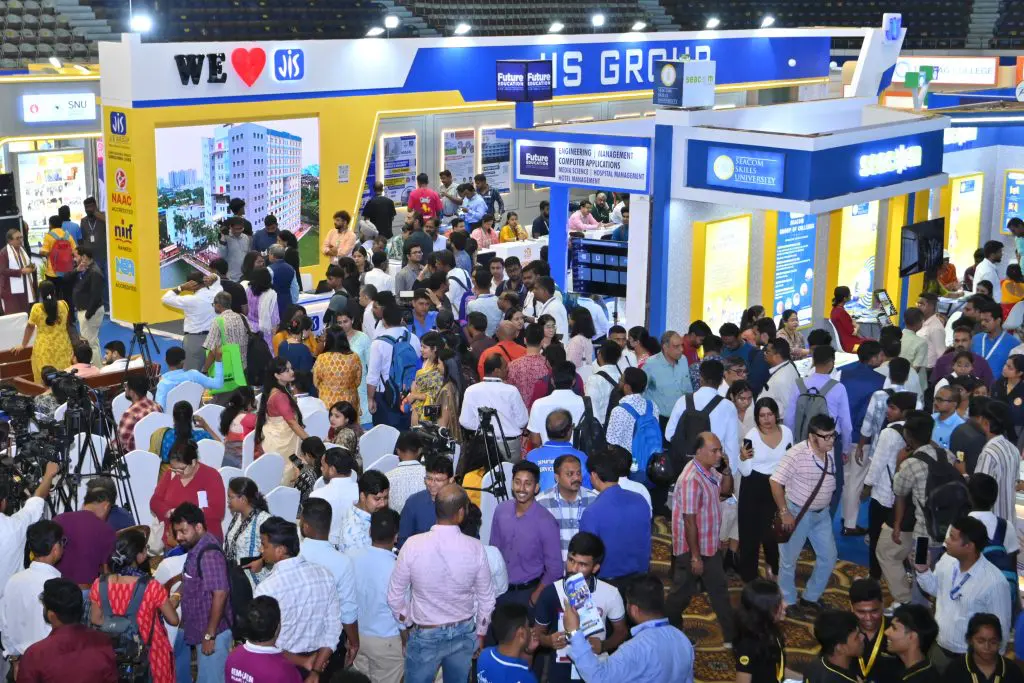
We help students connect with industry professionals who can answer questions about the discipline and the course that aligns with their interests. With such thorough guidance, you can gain confidence in starting a career in the aeronautical engineering field.
Join our educational fair to learn about career prospects and salaries in aeronautical engineering.
Frequently Asked Questions
1. Is there a high demand for aeronautical engineers?
Yes, there has been a rapid increase in the demand for aeronautical engineers. Advancements in aviation, space exploration, and defence have led to growing opportunities to develop drones and sustainable aircraft. They are offering job prospects in India and abroad.
2. Which field is best in aeronautical engineering?
Various fields offer promising aeronautical engineering scope. The fields include propulsion, avionics, flight testing, and structure. All these fields can cater to robust flights to smarter aviation systems.
3. What subjects do you study in Aeronautical Engineering?
To pursue a career in Aeronautical Engineering, the core subjects that you can study are physics, chemistry, and mathematics. Apart from that, you need to study specialised topics like aerodynamics, aircraft structures, flight mechanics, and aerospace vehicle design.
4. What is the difference between Aeronautical and Aerospace Engineering?
Aeronautical engineering deals with aircraft within the Earth’s atmosphere, including planes, drones, and helicopters. Aerospace engineering, on the other hand, caters to aircraft within the Earth as well as beyond. That involves satellites, orbital mechanics, probes, and spacecraft.
5. What are the common challenges in Aeronautical Engineering?
Though the scope of aeronautical engineering is promising, it experiences certain challenges. These include balancing safety/performance demands with cost and environmental pressures, overcoming supply chain issues, managing rapid technological transformations, and securing complex digital systems.
6. Is there any scope for aeronautical engineering for girls?
Yes, the scope of aeronautical engineering for girls is quite rewarding. From working as an aircraft maintenance engineer to further researching the discipline, there are various career opportunities for girls.
7. Can I join ISRO after aeronautical engineering?
Yes, after pursuing aeronautical engineering, you can join ISRO. Moreover, it is the core field from which the organisation recruits for roles in propulsion, launch vehicles, and spacecraft.
8. Is aeronautical engineering very difficult?
Topics such as aerodynamics, avionics, and propulsion, combined with mathematics and chemistry, can make aeronautical engineering challenging. However, the subject can be rewarding, especially for students who have dedication, passion, and strong analytical skills.
9. Does NASA hire aeronautical engineers?
Yes, among the wide variety of engineers, NASA also hires aeronautical engineers. By harnessing their skills in aircraft design, NASA can apply them to create advanced systems for space.
10. What specialisations are available in Aeronautical Engineering?
Aeronautical engineering is a multi-faceted discipline. It offers specialisations in spacecraft systems, aerodynamics, propulsion, and avionics.
11. What are the emerging technologies in aeronautical engineering?
The emerging technologies in aeronautical engineering focus on autonomy, sustainability, and efficiency. It includes key areas like digital twins and simulation, additive manufacturing, AI and Machine Learning, and Advanced Air Mobility.
12. Is there any scope for internships at aerospace companies?
Yes, the job scope for aeronautical engineering can be significantly higher with internships. In fact, many aerospace companies and related organisations offer internship opportunities to gain real-world experience in space tech, aircraft design, and the new space sector.