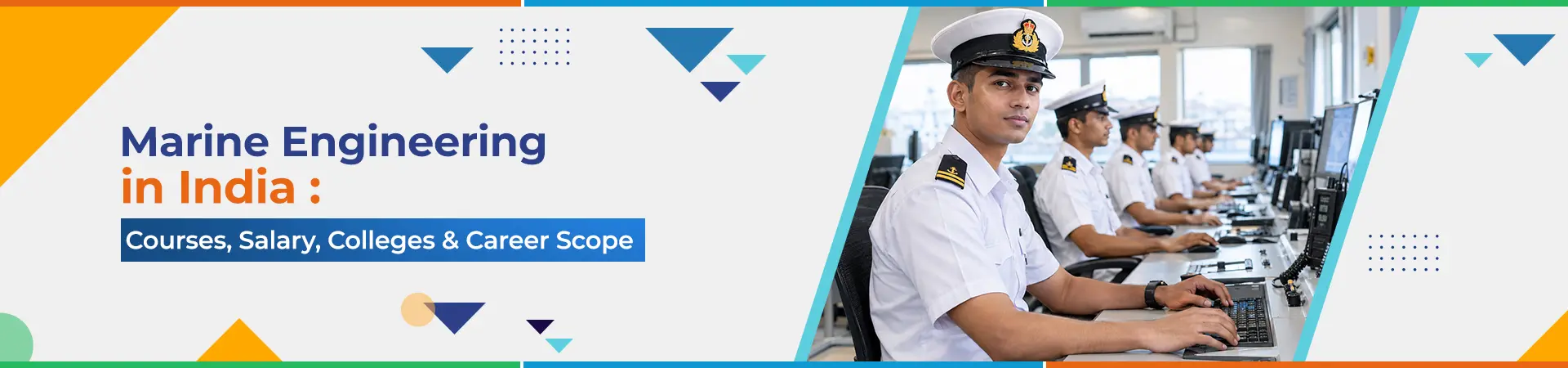
Ever wondered who keeps a ship moving when it is hundreds of kilometres from shore? Marine engineering could be the career that puts you at the centre of that work.
It focuses on the engines, machinery, electrical systems, and other equipment that help ships operate safely and efficiently. For students in India, it can offer a specialised route into the maritime industry after Class 12, with opportunities to build experience at sea and later explore shore-based roles.
But choosing this field requires more than an interest in ships. Before deciding, you need to understand the courses, eligibility, medical requirements, admission process, and colleges.
Salary and career progression also depend on your role, experience, employer, and work environment.
This guide covers marine engineering courses, fees, salary expectations, leading colleges, career opportunities, and future scope. It also compares related career paths to help you understand where this field could lead.
Key Takeaways
Here are the main points students should know before choosing marine engineering as a career:
- Students who meet the academic, age, and medical requirements can apply for approved marine engineering programs.
- A marine engineer can progress from entry-level engineering roles to senior positions such as Second Engineer and Chief Engineer.
- Careers can involve working onboard vessels or moving into shore-based roles in shipping, ports, shipyards, and technical management.
- The field offers practical experience, career growth, and global exposure, but also involves long periods at sea and demanding work schedules.
- Review course approval, eligibility, medical standards, fees, training facilities, placement support, and the institute’s career opportunities.
What Is Marine Engineering?
Marine engineering is a branch of engineering that deals with ships, boats, and the machinery that keeps them running. It covers systems such as marine engines, propulsion, electrical equipment, refrigeration, and other essential onboard machinery.
The course blends classroom learning with hands-on training. Students learn how to operate, maintain, and troubleshoot different ship systems.
They also gain practical knowledge of marine equipment and day-to-day vessel operations. This prepares them for engineering roles both at sea and in shore-based maritime industries.
Is Marine Engineering a Good Career in India?
Yes, marine engineering in India can be a good career choice for students who enjoy engineering, ships, and hands-on technical work. It offers practical experience with marine machinery and can lead to both sea-going and shore-based jobs as you gain experience and qualifications.
Why Students Choose Marine Engineering?
Marine engineering attracts students seeking technical careers with practical training, global exposure, and diverse opportunities.
- Practical learning: Gain hands-on experience with ship engines and marine machinery.
- Career opportunities: Explore seagoing and shore-based engineering roles.
- Global exposure: Work with international vessels, crews, and maritime operations.
- Career growth: Progress into senior technical and management positions.
- Technical skills: Develop strong skills in machinery, maintenance, and troubleshooting.
Marine Engineering vs Nautical Science vs ETO vs GP Rating
These four maritime pathways lead to different roles on a ship. Marine Engineering focuses on machinery, Nautical Science on navigation and deck operations, and ETO (Electro Technical Officer) on electrical and electronic systems. At the same time, GP (General Purpose) Rating prepares students for general deck and engine-room duties.
The following table will help you compare these courses:
| Course | Duration | Eligibility | Career Path | Best For |
| Marine Engineering | 4 years + shipboard training | Class 12 with PCM; requirements vary by institute | Marine Engineer → Senior Engineer → Chief Engineer | Students interested in ship machinery and engineering |
| Nautical Science | 3 years + required training | Class 12 with PCM; requirements vary by institute | Deck Cadet → Deck Officer → Chief Officer → Captain | Students interested in navigation and deck operations |
| ETO | 4 months + shipboard training | Relevant electrical/electronics qualification, depending on the route | Trainee ETO → Electro-Technical Officer | Students interested in electrical and electronic systems |
| GP Rating | 6 months + shipboard training | Class 10 or other approved routes, subject to DGS requirements | Deck/Engine Rating → Higher rating roles with experience | Students seeking an entry-level shipboard role |
Eligibility & Medical Fitness After 12th
For students planning Marine Engineering after 12th, meeting the academic requirements is only the first step. You must also meet the required medical standards before starting maritime training.
- Educational qualification: Pass Class 12 with Physics, Chemistry and Mathematics (PCM) and English.
- PCM marks: A minimum 60% average in Physics, Chemistry and Mathematics is generally required for the four-year degree route.
- English: At least 50% in English in Class 10 or Class 12 is generally required.
- Medical fitness: Pass a medical examination by a Directorate General of Shipping (DGS)-approved medical examiner, including required eyesight and colour-vision checks.
- Age: Check the current age criteria for your chosen course and institute before applying.
Admission Process: IMU-CET & Beyond
Admission to marine engineering usually involves meeting the course requirements, taking the required entrance examination, and completing counselling and document verification.
For the Indian Maritime University (IMU) route, the Indian Maritime University Common Entrance Test (IMU-CET) is an important part of the undergraduate admission process.
- Check eligibility: Make sure you meet the course’s academic, age, and medical requirements.
- Register for IMU-CET: Apply through the official Indian Maritime University admission portal when registrations open.
- Prepare for the exam: The undergraduate test covers Mathematics, Physics, Chemistry, English, and aptitude.
- Take IMU-CET: Appear for the entrance examination and obtain your rank.
- Join counselling: Use your rank to participate in the admission and seat-allotment process.
- Complete verification: Submit the required certificates and documents and complete the medical fitness formalities.
- Confirm your seat: Pay the applicable fees and complete the institute’s admission requirements.
Marine Engineering Courses After 12th
Students can choose different marine engineering courses based on their educational background and career plans. The four-year undergraduate route is the direct option after Class 12, while postgraduate programmes are available for those who already hold an engineering degree.
B.Tech/B.E. in Marine Engineering
A Bachelor of Technology (B.Tech.) or Bachelor of Engineering (B.E.) in Marine Engineering is the main undergraduate pathway after Class 12.
It combines classroom learning with practical training in marine machinery, engines, ship systems, and vessel operations. The B.Tech. program offered by Indian Maritime University is four years long.
Graduate Marine Engineering (GME/PGDME)
Graduate Marine Engineering (GME) is a shorter route for engineering graduates who want to move into marine engineering.
Post Graduate Diploma in Marine Engineering (PGDME) is generally a one-year program, with eligibility typically covering graduates from Mechanical Engineering, Naval Architecture, or related disciplines.
Postgraduate Options
For students looking to build advanced expertise, several postgraduate courses can lead to specialised roles in the maritime sector.
- Master of Technology (M.Tech.) in Marine Engineering and Management
- Master of Technology (M.Tech.) in Marine Technology
- Master of Technology (M.Tech.) in Naval Architecture and Ocean Engineering
- Master of Technology (M.Tech.) in Dredging and Harbour Engineering
Top Marine Engineering Colleges in India
Choosing the right marine engineering college involves more than checking rankings. Before choosing, check approval, practical training, facilities, course structure, and admission requirements.
| College/Institute | Location | Program | Duration |
| Indian Maritime University (IMU) | Chennai, Kolkata, Mumbai Port | Bachelor of Technology (B.Tech.) in Marine Engineering | 4 years |
| Tolani Maritime Institute (TMI) | Pune, Maharashtra | B.Tech. in Marine Engineering | 4 years |
| AMET (Academy of Maritime Education and Training) University | Chennai, Tamil Nadu | B.Tech. in Marine Engineering | 4 years |
| International Maritime Institute (IMI) | Greater Noida, Uttar Pradesh | B.Tech. in Marine Engineering | 4 years |
| Samundra Institute of Maritime Studies (SIMS) | Lonavala, Maharashtra | Marine Engineering programmes | Varies by program |
Best Marine Engineering Colleges for West Bengal Students
For students looking to study marine engineering in West Bengal, Kolkata offers a few options.
- Indian Maritime University (IMU)
- FOSMA Maritime Institute & Research Organisation
- Seacom Marine College
- Neotia Institute of Technology, Management and Science
How to Choose a Marine Engineering College?
Choosing a college is about finding a programme that fits your academic goals, budget, and career plans. Look beyond marine engineering fees and consider the overall training and opportunities the college provides.
Keep these points in mind before applying:
- Check DGS approval: Make sure the Directorate General of Shipping approves the program.
- Compare course fees: Look at tuition, hostel, training, and other costs before deciding.
- Review practical training: Check workshops, laboratories, simulators, and hands-on training facilities.
- Look at placement support: Check which companies recruit students and what marine engineer jobs are available in India.
- Consider location: Choose a location that suits your travel, accommodation, and training needs.
- Check course details: Compare the syllabus, training structure, internships, and shipboard exposure.
- Explore career opportunities: Consider how the programme supports your long-term marine engineering career scope.
Marine Engineering Fees: Government vs Private
Marine engineering fees can differ from one college to another based on the course, training, and facilities provided. Government colleges often have lower academic fees, while private institutes may charge more for training, accommodation, and other campus facilities.
| Type | College and Course | Fees (Approx.) |
| Government | Indian Maritime University (IMU)- B.Tech. Marine Engineering | ₹2.75 lakh/year |
| Private | Tolani Maritime Institute (TMI)- B.Tech. Marine Engineering | ₹5.46 lakh/year |
Marine Engineering Salary in India
The marine engineering salary in India depends on your role, experience, employer, and whether you work onboard a vessel or in a shore-based position. Entry-level pay is generally lower, while earnings can increase as you gain experience and move into senior roles.
Marine Engineer Salary by Career Stage
Your pay as a marine engineer usually increases as you gain experience and move into higher ranks. The range can also vary by employer, vessel, and job location.
| Career Stage | Typical Role | Salary/Pay Range | Key Factors |
| Entry Level | Trainee / Junior Marine Engineer | ₹2-7 LPA | Training, employer, location, and type of role |
| Early Career | Fourth / Third Engineer | ₹12-24 LPA | Sea time, rank, certifications, and vessel type |
| Mid Career | Second Engineer | ₹24.6-31.8 LPA | Experience, responsibilities, employer, and vessel |
| Senior Level | Chief Engineer | ₹41.7-50+ LPA | Rank, experience, vessel size, employer, and contract |
*Source: Glassdoor and Ambition Box
Why Marine Engineer Salaries Vary?
Marine engineer salaries vary at every stage of a career. Your rank, experience, employer, and vessel type can all affect what you earn.
A few factors make the biggest difference:
- Rank and position: Senior engineers take on more responsibility and usually earn more.
- Experience: As you gain sea time and practical experience, you can move into higher-paying roles.
- Employer: Different shipping companies and maritime employers have different pay structures.
- Vessel type: The vessel’s size, type, and operations can influence your pay.
- Job location: Pay may differ between domestic and international assignments.
- Certifications: Relevant maritime certifications can support your move to higher ranks and roles.
- Type of job: Sea-going positions and shore-based jobs can have different salary structures.
Marine Engineering Career Scope in India
The marine engineering career scope extends beyond onboard shipboard work. With the right qualifications and experience, you can also move into several shore-based maritime roles.
Some common career options include:
- Shipboard roles: Work as a marine engineer and progress to senior engineering ranks onboard vessels.
- Shipping companies: Handle vessel maintenance, technical operations, and engineering support from shore.
- Ports and shipyards: Work in port operations, ship repair, maintenance, or technical management.
- Offshore sector: Explore engineering roles supporting offshore vessels, platforms, and related operations.
- Specialised careers: Move into areas such as marine surveying, ship design, marine consultancy, or technical supervision.
Marine Engineering Jobs in India
Marine engineering can lead to jobs both onboard ships and in shore-based maritime companies. The role you choose will depend on your qualifications, experience, and career interests.
Some common marine engineer jobs in India include:
- Marine Engineer: Operates, maintains, and repairs a vessel’s engines and machinery.
- Chief Engineer: Leads the engine department and oversees all major machinery operations.
- Technical Superintendent: Monitors vessel maintenance, repairs, and technical performance from shore.
- Marine Surveyor: Inspects ships, machinery, and equipment to check their condition and compliance.
- Port Engineer: Handles engineering, maintenance, and technical work related to port operations.
- Ship Manager: Coordinates vessels’ technical and operational requirements from shore.
Sea-Based Marine Engineering Careers
Sea-based roles keep marine engineers closely involved with a vessel’s machinery and daily operations. As you gain experience, you can take on different onboard engineering responsibilities.
Some key sea-based career options include:
- Engine Cadet: Assists the engineering team while gaining practical experience onboard.
- Fourth Engineer: Handles routine machinery checks, maintenance, and engine-room duties.
- Third Engineer: Looks after assigned machinery and supports the smooth running of engine-room operations.
- Second Engineer: Supervises engine-room work and coordinates maintenance activities.
- Chief Engineer: Leads the engineering department and oversees the vessel’s machinery and technical operations.
- Electro-Technical Officer (ETO): Maintains and monitors the ship’s electrical and electronic systems.
What Is Life Like for a Marine Engineer?
Life as a marine engineer is hands-on, demanding, and closely tied to the ship’s daily operations. Marine engineering can also extend beyond sea life, as experience opens up shore-based options.
Here’s what the job can involve:
- Long periods at sea: You may spend several months onboard before returning home.
- Daily machinery checks: Engines, pumps, generators, and other systems need regular monitoring and maintenance.
- Hands-on work: The job involves inspections, repairs, troubleshooting, and routine engine-room tasks.
- Teamwork onboard: Marine engineers work closely with other crew members to keep the vessel running safely.
- Fixed routines: Watchkeeping and maintenance schedules can shape your daily routine.
- Career progression: With experience and the required certifications, you can move into higher engineering ranks or explore shore-based roles.
Women in Marine Engineering
Women can build rewarding careers in marine engineering, both at sea and ashore. The field is open to students who meet the required academic and medical standards.
With the right training, certifications, and experience, women can progress into senior engineering roles and technical positions across the maritime industry.
Marine Engineering vs Other Engineering Careers
Engineering has a wide scope, with careers spanning many industries and specialisations. Marine engineering stands apart by focusing on ship machinery, propulsion, and onboard systems, making it a more specialised path than many conventional engineering careers.
Marine Engineering vs Mechanical Engineering
Mechanical engineering spans many industries, from manufacturing to automobiles and energy. Marine engineering is more specialised, focusing on ship machinery, propulsion, and onboard systems.
| Aspect | Marine Engineering | Mechanical Engineering |
| Main Focus | Ship engines, propulsion, and onboard machinery | Machines, equipment, and mechanical systems |
| Work Environment | Ships, shipyards, ports, and maritime companies | Manufacturing plants, offices, workshops, and various industries |
| Specialisation | Focuses mainly on marine machinery and vessel systems | Covers areas such as design, production, automobiles, and energy |
| Career Options | Marine Engineer, Ship Surveyor, Technical Superintendent | Design Engineer, Production Engineer, Maintenance Engineer |
| Industry Scope | Mainly connected to the maritime and shipping sector | Spans multiple engineering and industrial sectors |
Marine Engineering vs CSE
The CSE (Computer Science Engineering) scope covers software, computing, data, and digital technologies across many industries. Marine engineering, in contrast, focuses on ship machinery, propulsion, and onboard systems.
| Aspect | Marine Engineering | Computer Science and Engineering (CSE) |
| Main Focus | Ship machinery, engines, propulsion, and onboard systems | Software, computing, programming, and digital systems |
| Work Environment | Ships, ports, shipyards, and maritime companies | Offices, technology companies, startups, and remote workplaces |
| Core Subjects | Thermodynamics, fluid mechanics, marine machinery, and marine systems | Programming, data structures, algorithms, databases, and computer systems |
| Career Options | Marine Engineer, Technical Superintendent, Marine Surveyor | Software Developer, Data Analyst, Systems Engineer |
| Industry Scope | Mainly focused on shipping and maritime industries | Spans technology, finance, healthcare, e-commerce, education, and other sectors |
Marine Engineering vs Electrical Engineering
Electrical engineering covers power systems, electrical equipment, automation, and many industries.
Marine engineering applies this knowledge to shipboard machinery and electrical systems, along with engines and other marine equipment.
| Aspect | Marine Engineering | Electrical Engineering |
| Main Focus | Ship machinery, propulsion, and onboard systems | Electrical power, circuits, machines, and control systems |
| Work Environment | Ships, ports, shipyards, and maritime companies | Power plants, manufacturing units, offices, and other industries |
| Specialisation | Marine engines, auxiliary machinery, ship systems, and vessel operations | Power systems, electrical machines, electronics, automation, and control |
| Career Options | Marine Engineer, Technical Superintendent, Marine Surveyor | Electrical Engineer, Power Engineer, Control Engineer |
Future Scope of Marine Engineering in India
The future of marine engineering is closely linked to cleaner fuels, smarter ship systems, and changing maritime technology. As shipping moves toward more efficient and lower-emission operations, marine engineers will need to keep updating their technical skills.
Emerging Areas in Marine Engineering
Marine engineering is changing as new ship technologies and cleaner operating methods emerge. These developments are creating new areas for engineers to build technical skills.
- Alternative Fuels: Work with cleaner fuels such as ammonia, methanol, hydrogen, and biofuels.
- Smart Ship Technology: Use automation, connected systems, and digital tools to improve vessel operations.
- Autonomous Shipping: Support ships that use remote and autonomous technologies for selected operations.
- Electric and Hybrid Systems: Work with batteries, hybrid propulsion, and newer ship power systems.
Skills Future Marine Engineers Will Need
Future marine engineers will need a mix of strong engineering knowledge, practical ability, and comfort with new technologies.
- Digital Skills: Understand automation, digital monitoring, and computer-based ship systems.
- Technical Expertise: Stay updated with modern engines, propulsion systems, and alternative fuels.
- Problem-Solving: Diagnose equipment issues and find practical solutions quickly.
- Environmental Awareness: Understand energy efficiency, cleaner technologies, and changing maritime requirements.
Is Marine Engineering Worth It? Honest Pros & Cons
Marine engineering can suit students who enjoy technical work and are comfortable with life at sea. Like any career, it has clear advantages and challenges to consider before choosing it.
Pros
- Practical work: You get hands-on experience with engines, machinery, and ship systems.
- Career growth: Experience and higher certifications can lead to senior engineering positions.
- Global exposure: Seagoing roles can involve working on international vessels and with diverse crews.
- Different career paths: You can move from shipboard roles into technical, management, or other shore-based positions.
Cons
- Long periods away from home: Sea-based jobs can require months onboard.
- Demanding work: Engine-room duties can involve long hours, strict routines, and physically demanding tasks.
- Limited personal flexibility: Your schedule is largely shaped by the vessel’s operations and watchkeeping duties.
- Medical requirements: You need to meet prescribed medical standards to work in many seagoing roles.
Shape Your Future in Marine Engineering with Career Planner
Marine engineering can open the door to a specialised career for students who enjoy engineering, ships, and practical technical work. However, choosing the right course and career path requires careful planning.
That’s when Career Planner steps in. Our educational interface lets students connect with top college representatives.
A direct conversation with them can help you understand which career option best suits your passion and education.
Join our next educational interface to take a confident step toward your marine engineering career.
FAQs
1. Is marine engineering a good career in India?
Yes, marine engineering can be a good career for students interested in ships, machinery, and hands-on technical work. It can lead to sea-going and shore-based roles. However, students should consider the training, medical requirements, time away from home, and career goals before choosing it.
2. Can I switch to a shore job later?
Yes, marine engineers can move into shore-based roles after gaining relevant experience and qualifications. Options may include technical superintendent, marine surveyor, ship management, and port-related positions. The transition depends on your experience, certifications, and the type of role you pursue.
3. Is marine engineering hard?
Marine engineering can be challenging because it combines engineering theory with practical training and technical work. Subjects such as thermodynamics, machinery, and marine systems require consistent study. Life onboard can also involve long hours and strict routines, so students should be comfortable with both academic and practical demands.
4. Can women become marine engineers?
Yes, women can become marine engineers if they meet the academic, medical, and other eligibility requirements. Women can work in both sea-going and shore-based maritime roles. Current Indian Maritime University requirements include prescribed medical fitness standards for marine programs.
5. What if I have eyesight problems?
Eyesight problems do not automatically mean you cannot pursue marine engineering, but sea-going roles have specific medical standards. The required medical examination assesses vision, colour vision, and other eye conditions. Check your eligibility with a Directorate General of Shipping-approved medical examiner before enrolling.
6. Marine engineering vs mechanical engineering — which is better?
Neither is better for everyone. Marine engineering is more specialised toward ships and maritime systems, while mechanical engineering gives you access to a wider range of industries. Your choice should depend on whether you want a maritime-focused career or broader engineering options.
7. What is the salary of a Marine Engineer in India?
Marine engineers in India earn around ₹13.7 lakh to ₹22.4 lakh per year, depending on the role and experience. Actual salaries vary by rank, employer, vessel, and whether you work at sea or ashore, so treat this range as indicative.
8. Is Marine Engineering better than CSE?
There is no single answer because the two fields lead to very different careers. Marine engineering focuses on ships, machinery, and maritime operations, while Computer Science and Engineering (CSE) covers software, computing, and digital technology. Your interests and preferred work environment should guide the choice.
9. How long is a Marine Engineering course?
A Bachelor of Technology (B.Tech.) in Marine Engineering generally takes four years to complete. The programme combines academic study with practical marine engineering training. Other routes, such as a Post Graduate Diploma in Marine Engineering (PGDME), have different durations and eligibility requirements.
10. Is Marine Engineering part of the Merchant Navy?
Yes, marine engineering is one of the technical career paths within the Merchant Navy. Marine engineers work with a vessel’s engines, machinery, and other technical systems. After completing an approved programme and meeting the required medical and certification standards, graduates can pursue onboard engineering roles.
11. Is Marine Engineering worth it in 2026?
Marine engineering can be worth considering in 2026 if you are genuinely interested in ships, machinery, and a seagoing career. The field is also evolving with automation, cleaner fuels, and smarter ship systems. Before choosing it, compare the course, costs, medical requirements, lifestyle, and long-term career options.